






AICA History
The American-International Charolais Association (AICA) has evolved significantly over its 69-year history. From its early years in Houston to its relocation to Kansas City, AICA has embraced technological advances and streamlined processes to support its members and the development of the Charolais breed. Today, with the advent of the AI-Guided Selection System, AICA is poised to offer unprecedented traceability and profitability insights from genetics to consumers.
Looking ahead
With the AI-Guided Selection System, AICA is preparing for a future where retailers, feeders, and consumers can trace the value and profitability of Charolais genetics from the ranch to the plate, ushering in a new era of transparency and innovation in the beef industry.
2010s - Present
August 1, 2025
Introduced the Docility trait in the National Cattle Evaluation
April 2025
Launched the AICA Legacy Breeder Program to honor members with 20, 30, 40, 50, 60, and 70 years of continued commitment to the Charolais breed.
June 16-21, 2025
Celebrated 50 years of the AIJCA Junior National Show.
January 2025
Introduced the AccuSire Progeny Testing Program in partnership with West Texas A&M University, enabling members to enhance EPD accuracy through standardized ranch, feedlot, and harvest data, with nominated bulls bred on WTAMU cows and progeny tracked for key traits.
January 2024
Unveiled a modernized logo and comprehensive brand refresh—the first visual identity update in over five decades.
2024
Introduced the Charolais Digest, a dynamic digital eNewsletter tailored exclusively for AICA members.
August 2024
Revised the AICA Terminal Sire Index (TSI), modernizing selection of terminal sire genetics for the beef industry.
October 2024
Launched the Profit Driver feedlot program, offering members and bull buyers critical insights into feed efficiency, harvest performance, and key industry metrics.
2023
Debuted the Charolais USA Podcast, offering in-depth industry insights and captivating member stories.
August 2023
Created a joint genetic evaluation with the Canadian Charolais Association.
January 2023
Registered the 1,000,000th bull:
SVY Mayfield 30H.
May 13–21, 2010
World Charolais Congress in Oklahoma City and San Antonio; 150 participants from 15 countries.
2000s:
Enhanced Evaluation and Recognition
January-December 2007

Marked AICA’s 50th anniversary; commemorative coverage began in the January issue of the Charolais Journal.
June 2004
Registered the 1,000,000th female:
WWCR Penny 3076 ET.
March 2002
Celebrated the 25th year of the Charolais Journal.
2001
Launched Whole Herd Rewards and Performance Plus programs.
2000
Added multiple trait and carcass EPDs to the AICA National Cattle Evaluation.
1990s:
Technological Advancements
1997
Introduced the Total Herd Reporting system.
June 19–22, 1995
Sponsored the 29th World Charolais Congress in Montana, Wyoming, and South Dakota with 263 attendees from 22 countries.
1993
Transitioned from mainframe to desktop computer systems.
1980s:
Relocation to Kansas City
1985
Introduced Performance Pedigrees.
June 19–22, 1995
Sponsored the 29th World Charolais Congress in Montana, Wyoming, and South Dakota with 263 attendees from 22 countries.
February 18–26, 1985
Hosted the World Federation of Charolais in San Antonio, TX.
1984
Launched the Show Animals of the Year program.
November 3, 1984
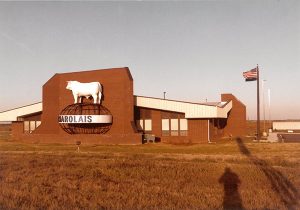 Dedication of new headquarters at 11700 NW Plaza Circle, Kansas City, MO.
1982–1983
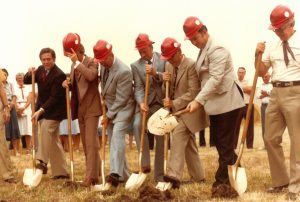
Decision and relocation of AICA and the Charolais Journal to Kansas City, MO.
1970s:
Expansion and Innovation
March 1977
Began publishing the Charolais Journal; inaugural cover featured Miss Lin No. 33.
1976
Founded the Dams of Distinction program.
1975
Initiated the Charolais Sire Evaluation Program and published the first Sire Summary.
1974
Established AICA field staff with Eastern and Western area representatives; launched the Roll of Excellence (ROE) program.
October 1971
Hosted the World Charolais Congress in Kansas City, MO, and Dallas, TX.
1971
Launched Charolais Herd Improvement Program (CHIP), the first computerized record-keeping system.
February 25, 1970

Dedication of new Houston headquarters at 1610 Old Spanish Trail, featuring a 75-foot revolving bull atop a globe. Executive Secretary: J. Scott Henderson; 1,000 enthusiasts attended.
1970
Reached 10,000 members (Mr. & Mrs. Wilbur Racette), 100,000 purebred registrations, and 450,000 percentage animal registrations.
1950s–1960s:
Consolidation and Growth
1967
Merger with the American Charbray Breeders Association, bringing all Charolais‐based breeds under AICA.
1964
Pan‐American Charolais Association merged into AICA, integrating performance‐based registrations.
July 29, 1957
First Board of Directors meeting at the Rice Hotel in Houston; I.A. Krusen elected President, G.A. Morris Vice President, Raymond Pearson Secretary, and L.O. Tarrant Treasurer. Membership grew to 297 by year’s end.
July 15, 1957
Consolidation of the International Charollaise Association and the American Charolaise Breeders Association, forming the AICA.
Registration No. 1
Miss Lin No. 33 (Sire: Iroquois HBC 19018; Dam: Hantise HBC 28791).
February 2–13, 1955
First Charolais Show in the U.S. at the Houston Fat Stock Show.
1957–1965
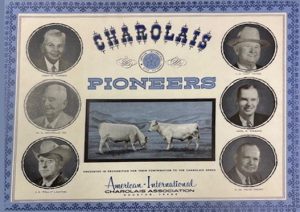
Pioneer breeders—Fred W. Turner, M.G. Michaelis Sr., J.A. “Pally” Lawton, I.G. “Cap” Yates, Harl Thomas, and C.M. “Pete” Frost—built the foundation herds of fullblood and purebred Charolais in the United States.
Late 1940s–Early 1950s:
Breed Registry Foundations
Late 1940s–early 1950s
Established the American Charbray Breeders Association and the International Charolais Association as separate registries, expanding Charolais‐based bloodlines through Charbray and performance‐driven programs.
Mid-1940s
Hoof and mouth disease outbreak in Mexico led to a permanent quarantine treaty between the U.S., Canada, and Mexico, shaping future import protocols.
Early 1900s
1934
First Charolais imported from Mexico to the United States.
1910
First Charolais cattle arrived in North America, landing in Mexico.