







The AICA Terminal Sire Index (TSI) utilizes EPDs and genomic data from the American-International Charolais Association (AICA) database to assist in identifying the most profitable genetics for your operation. Using advanced economic selection index theory & bioeconomic modeling, the TSI generates dollar indexes for terminal progeny produced by bulls in the AICA database. These indexes rank sires based on their profit potential, allowing you to quickly make more informed decisions. For example, if Sire A has an index of $191.66 and Sire B comes in at $280.00, you can anticipate an average net return of $88.34 more per offspring from Sire B. To consider that impact over 25 calves in 5 years, the increased profit potential would be expected to be more than $11,000. TSI assumes that all offspring are marketed based on carcass value, while replacement females are either purchased or raised separately. Inputs should be provided based on historical information from your operation. The TSI economic default value is based on a ten year rolling averaged utilizing USDA data.
Why use TSI when selecting bulls?
In an ideal selection scheme producers would select breeding animals that excel in all traits. In reality though, this is not the case. Producers often find it necessary to make compromises in selection to balance the strengths and weaknesses among selection candidates. This is driven by the fact that unfavorable relationships exist between traits. Therefore, it is difficult for producers to weigh all the options appropriately given the various management programs and diversity among beef cattle. To make this decision even more challenging is the fact that not all producers sell beef cattle based on the same marketing grid.
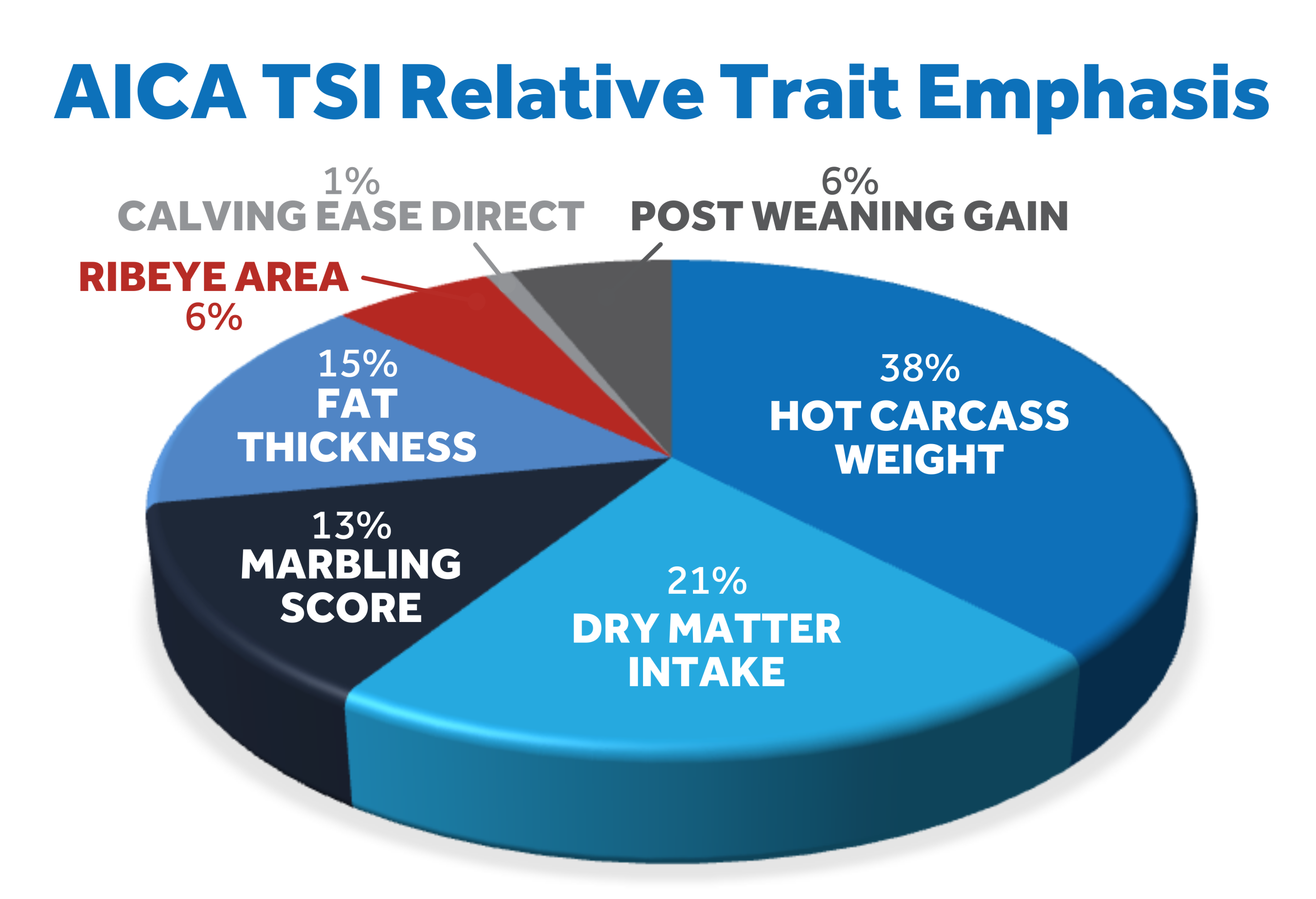
A selection index is a formal method of combining Expected Progeny Differences (EPD) for different traits into one single value on which to base selection decisions. The AICA Terminal Sire Index uses estimates of the genetic relationships between traits and breeder historical input data on the cow herd a sire is to be mated along with marketing and carcass grid specifications to determine economic values to use in the index. These economic values are then multiplied by the EPD and summed to produce an overall index value for each animal for the selected scenario. This index places economic value on the various traits that are important to the given scenario.
Check out these resources for more information:
Sire Listing Criteria
For bulls to have a Terminal Sire Index they must be registered with the American-International Charolais Association. Each bull must also have an EPD for CED, WWT, YWT, MAT, REA, HCW, MARB and FAT.
PROGENY PROVEN SIRES
Must have sired at least 3 calves with performance data reported to AICA within the last two years and an accuracy value of .30 or higher.
UNPROVEN SIRES
30 months of age or younger.
Ad Copy Resources for TSI
Disclaimer: The AICA Terminal Sire Profitability Index is provided as a service by the American-International Charolais Association (AICA). The information provided by this service was compiled from information provided by breeders to the AICA. The AICA makes no representation or warranty with respect to the accuracy of the information submitted to them by breeders or the fitness of this service for a particular purpose. The AICA, their officers, directors, employees, and agents assume no liability for the accuracy of the contents of this service or the use or interpretation of any information provided.